
Technology
Dispatch, Tracking and Compliance Technology Behind Every Ride
Live dispatch with GPS tracking, no-show protocol enforcement, driver and vehicle compliance, multi-agency ride coordination and contract billing — in one auditable system.
Accessible transportation is judged on two things: whether the vehicle showed up, and whether you can prove it. Our coordination platform is built around both — real-time visibility for the day of service, and a trip record that still holds up weeks later when a program report or an invoice is questioned.
The same system runs behind everything from a single resident appointment to a multi-agency, county-scale non-emergency transportation program.
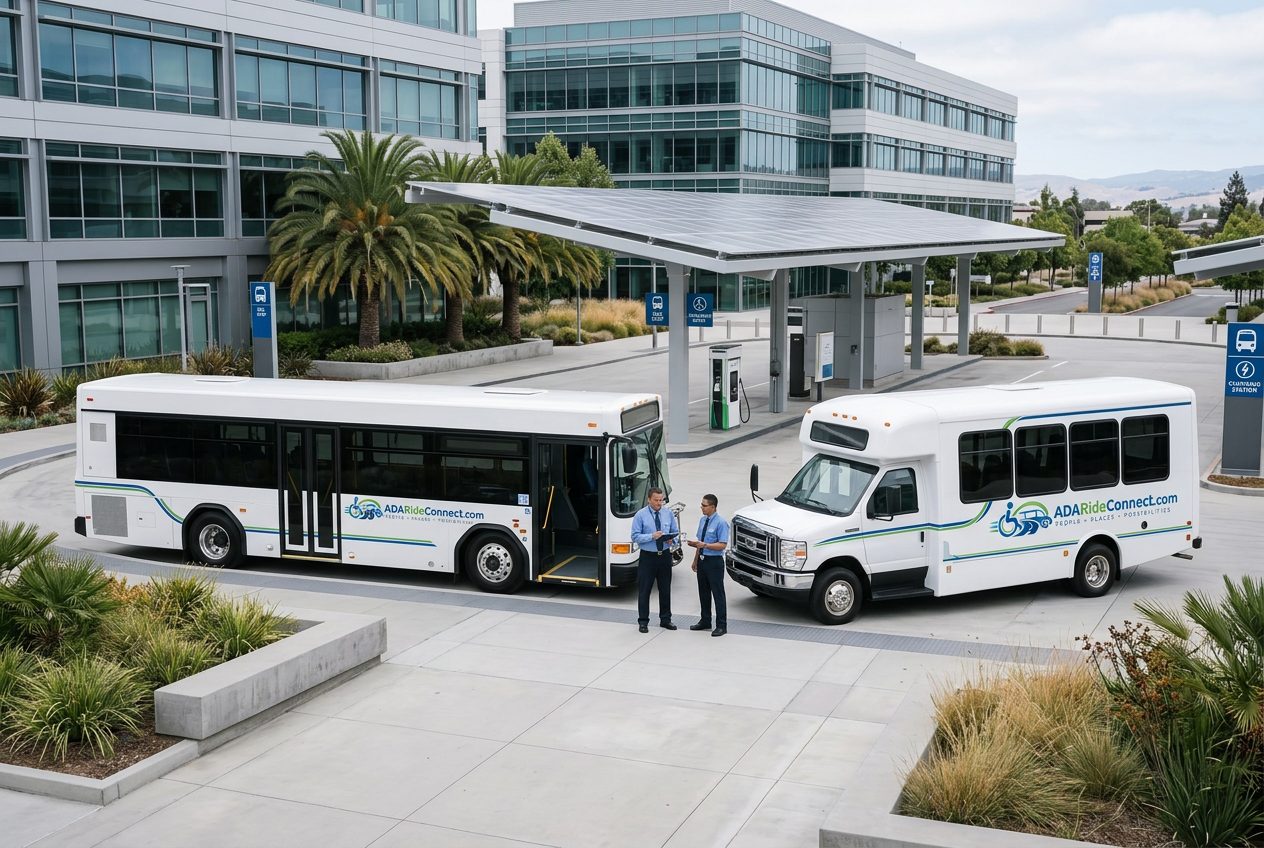
Platform capabilities
Live dispatch with GPS tracking
Every trip is dispatched and tracked in real time. Coordinators can see where a vehicle is, whether it is running to schedule and when a rider was actually picked up and dropped off — not what the schedule said should have happened.
Multi-agency ride coordination
Trips from several departments or programs are coordinated in one system, so a single rider, a single vehicle and a single day's routing are visible in one place instead of being split across separate spreadsheets and phone calls.
No-show protocol enforcement
No-shows, late cancellations and wait-time rules are recorded against the trip as they happen, following the protocol agreed with the contracting agency, so the record is consistent and defensible.
Driver and vehicle compliance
Driver credentials, training, vehicle inspections and accessibility equipment checks are tracked with expiry dates, so an out-of-date item is caught before the vehicle is assigned rather than after.
Auditable contract billing
Completed trips feed straight into contract billing with the trip record, timestamps and trip status attached, so an invoice line can be traced back to the ride it came from.
Secure, role-based access
Authorized personnel sign in with their own accounts, and what each person can see or change depends on their role and the program they work with.
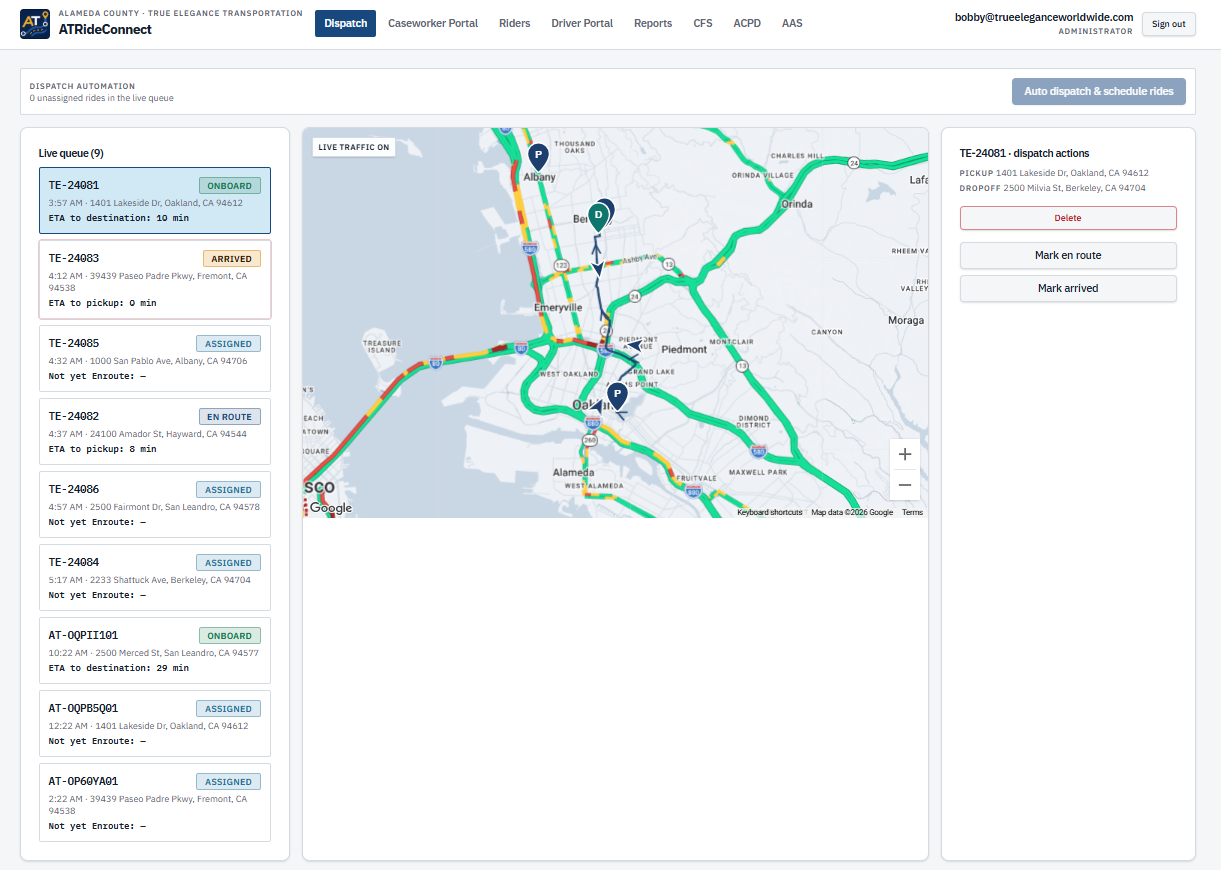
Live dispatch board
Dispatchers work from one live queue with GPS positions, traffic and trip status on a single screen, so a delay is visible before anyone has to call and ask.
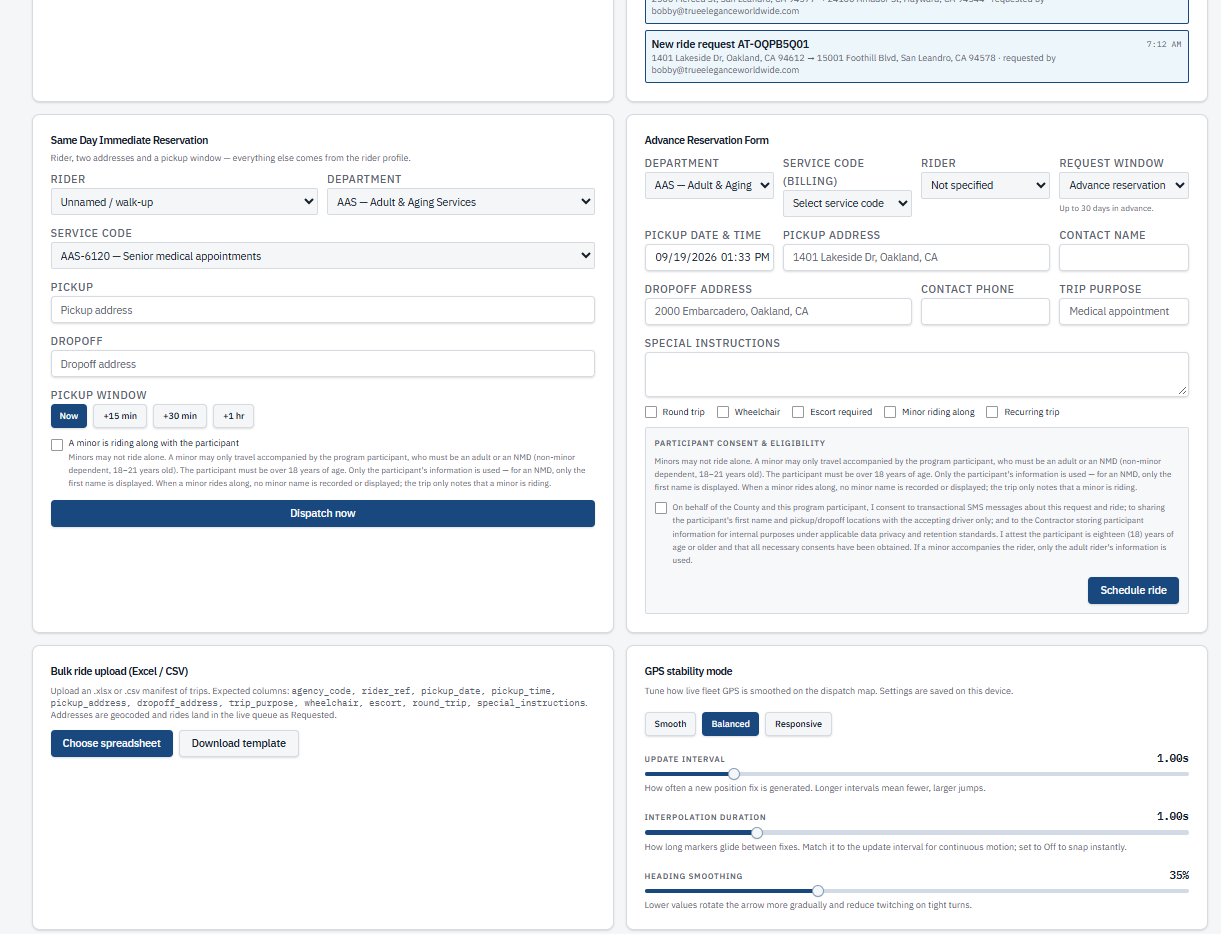
Booking and same-day dispatch
Advance reservations, same-day walk-ups and bulk schedule uploads all enter the same system, with mobility needs, escorts and consent captured at the point of booking.
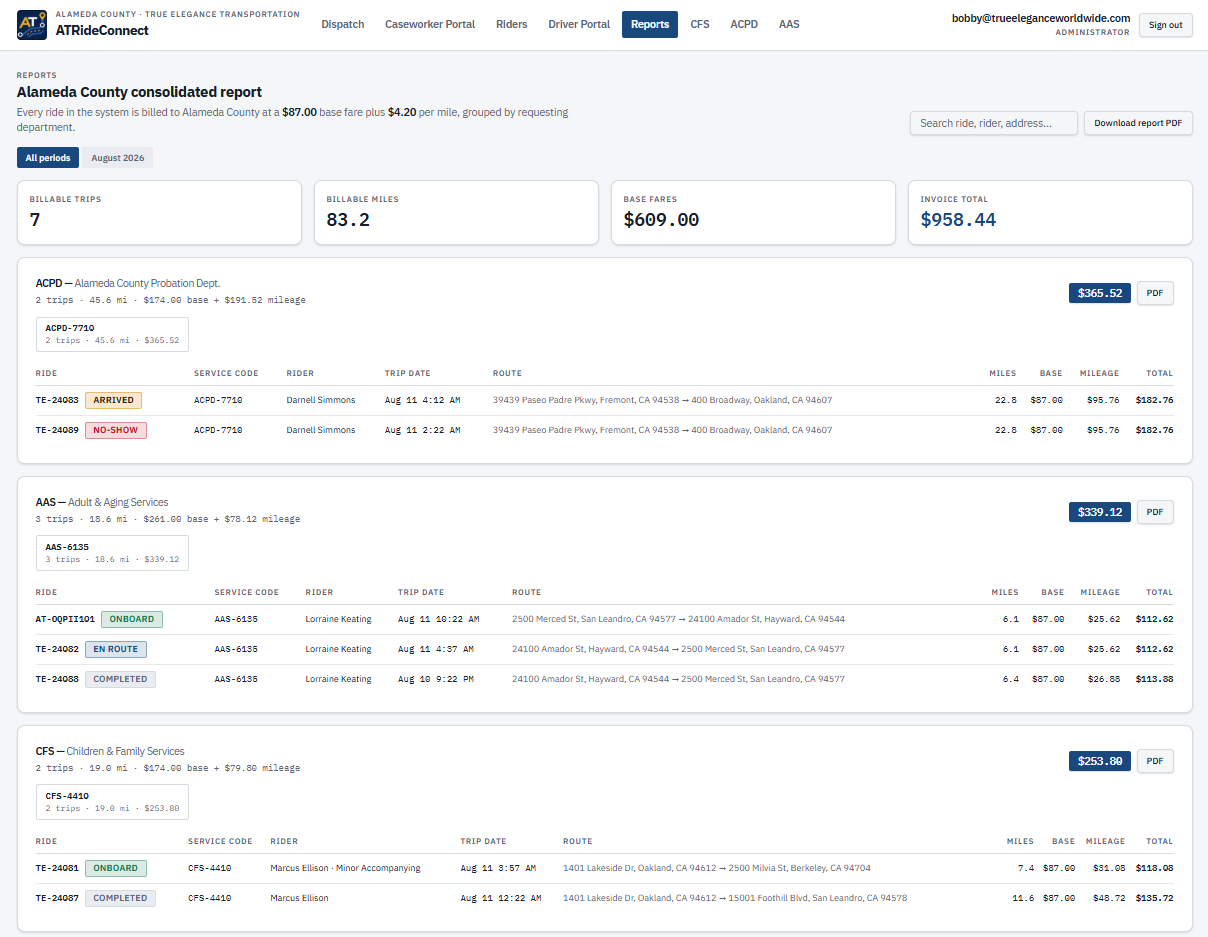
Reporting and contract billing
Every completed trip rolls up into a consolidated report grouped by requesting department, with mileage, fares and trip status attached to each line.
How a trip moves through the system
1. Trips are entered or imported
Coordinators submit individual trips or a recurring schedule. Mobility needs, equipment type and accompanying passengers are recorded with the booking.
2. Dispatch assigns and tracks
The right accessible vehicle is assigned and dispatched, with live GPS position and status updates for the whole day of service.
3. The trip record is closed out
Pickup, drop-off, wait time, cancellations and no-shows are captured against the trip under the agreed protocol.
4. Reporting and billing follow the record
Program reporting and contract invoicing are generated from the same trip data, so what is billed matches what was delivered.
Who this matters most to
- Government agencies and publicly funded programs that must document every trip
- Regional centers and case-managed programs coordinating riders across teams
- Healthcare organizations tracking appointment arrivals and missed trips
- Senior living communities running standing weekly resident schedules
- Schools, universities and corporate campuses operating fixed accessible routes
- Nonprofits reporting program transportation to funders
Technology: common questions
Need documented, trackable accessible transportation?
Tell us about your program, your riders and the reporting you are accountable for, and we will put together a transportation proposal.